
AI & Automation
Agentic AI for Sri Lankan Businesses: 7 Workflows to Automate First
Learn which business workflows Sri Lankan companies should automate first with agentic AI, from customer support and ERP tasks to reports and approvals.
Need AI integrated into your ERP, website, WhatsApp, CRM or internal systems?

In July 2026, enterprise software stopped being about AI that answers questions and started being about AI that completes work. Analysts including Gartner now forecast that 40% of enterprise applications could embed task-specific AI agents by the end of the year, up from under 5% twelve months ago. Another Gartner report on the same day warned that agentic AI could expose hundreds of billions of dollars in traditional SaaS spending to disruption as agents bypass dashboards and per-seat licensing.
For Sri Lankan business owners, that headline can sound exciting and confusing at the same time. Do you need an agent for everything? Should you replace your ERP? Cancel software licenses? The practical answer is simpler: automate the workflows that are already slow, repetitive, cross-system, and measurable—then expand only after you can prove ROI and keep humans in control.
What agentic AI actually means
An agentic system does more than generate text. It can plan steps, call tools, read data from connected systems, draft outputs, route work to the right person, and sometimes execute low-risk actions with approval rules. Think of it as a digital assistant that can operate inside your software stack—not a chat window floating beside a spreadsheet.
- Generative AI: writes an email draft when you ask.
- Automation: sends the same report every Monday at 8 a.m.
- Agentic AI: checks overdue invoices, drafts reminders, updates CRM notes, and queues finance approval—only after your rules allow it.
What not to automate first
The fastest way to waste money in 2026 is to launch a broad “AI transformation” without a workflow owner, clean data, or success metrics. Gartner and other analysts warn that a large share of agentic pilots could be cancelled by 2027 when they lack governance, integration depth, or clear outcomes.
- Strategic decisions that need judgment, negotiation, or regulatory sign-off.
- Workflows where your data lives in WhatsApp threads, personal inboxes, and inconsistent spreadsheets.
- Customer-facing actions with no human review, audit trail, or rollback plan.
- “Agent for everything” projects with no single department sponsor.
- Replacing core ERP, HMS, or finance systems before you understand daily operating pain.
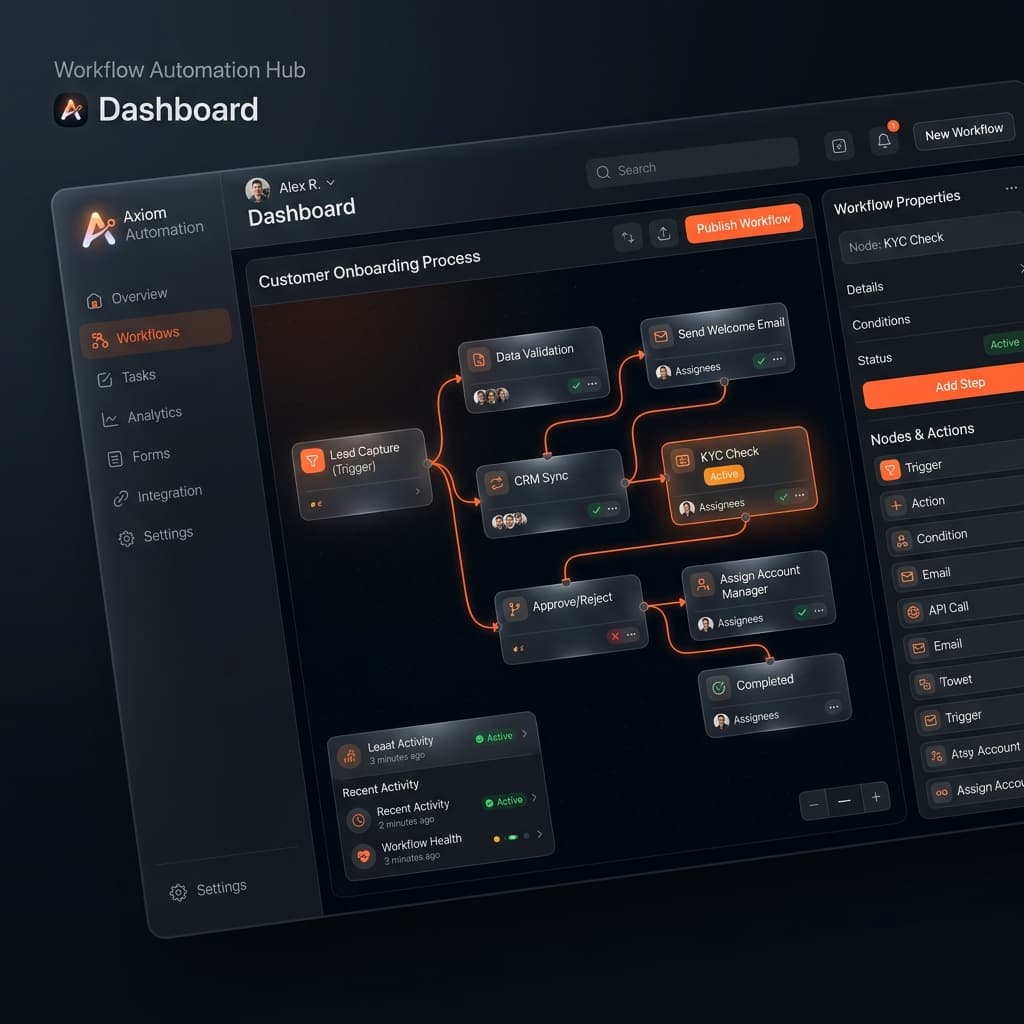
The six workflows Sri Lankan businesses should automate first
These are the highest-return starting points we see across retail, manufacturing, services, healthcare, and property companies in Sri Lanka. Each one is repetitive, cross-functional, and easy to measure.
1. Exception handling in finance and operations
Agents excel at surfacing what is wrong: mismatched POS totals, duplicate invoices, stock variances, overdue payments, or VAT line items that do not match the approved format. The agent prepares the exception summary and recommended next step; a finance or operations manager approves.
2. Customer and debtor follow-up
Sales and finance teams spend hours chasing quotations, payments, and delivery confirmations. An agent can read CRM or ERP status, draft personalized follow-ups, schedule reminders, and log every touch—without sending anything automatically on day one.
3. Internal reporting and management packs
Branch managers and directors still lose time compiling weekly sales, stock, cash collection, and pipeline summaries. Agents connected to ERP, POS, and spreadsheets can assemble draft reports with commentary, freeing leaders to decide instead of copy-pasting.
4. Document intake and data entry
Purchase orders, supplier invoices, delivery notes, job applications, and patient registration forms are strong agent candidates. The agent extracts fields, flags missing data, and routes records for human verification before posting to the system of record.
5. Support triage and knowledge lookup
For companies with recurring customer questions—warranty terms, appointment slots, loan status, course enrollment—agents can classify requests, pull answers from approved knowledge bases, and escalate only what needs a person. This is not a replacement for support staff; it reduces queue noise.
6. Procurement and replenishment signals
Retailers and manufacturers with inventory discipline can use agents to monitor reorder points, compare supplier lead times, and draft purchase requests. The buyer still approves. The win is fewer stock-outs and less emergency purchasing at premium prices.
How to choose your first project in one week
- List ten repetitive tasks your team complains about every month.
- Score each task for frequency, error cost, data availability, and approval complexity.
- Pick one workflow where success can be measured in hours saved, faster collections, or fewer errors.
- Name a business owner—not only an IT contact—who will defend the pilot.
- Define what the agent may draft, what it may execute, and what always needs human approval.
- Run a 30-day pilot with logging before expanding scope.
The infrastructure agents actually need
Agents fail when they cannot reach trustworthy data. In 2026, integration depth matters more than model brand. Your systems need reliable APIs or controlled database access, role-based permissions, and a single source of truth for customers, products, stock, invoices, and employees.
- ERP, POS, HMS, or CRM as the system of record—not parallel spreadsheets.
- Clear ownership of master data and approval policies.
- Audit logs for what the agent read, drafted, and attempted.
- Fallback routing when a model, API, or provider is unavailable.
- A written acceptable-use policy for staff using public AI tools alongside internal agents.
Agentic AI vs buying more SaaS seats
Gartner’s July 2026 analysis highlights a shift from buying more dashboards and user licenses toward buying outcomes. That does not mean cancel your ERP tomorrow. It means your software investments should connect to execution, not only visibility. A hospital that buys another reporting module but still copies lab results manually will not capture agentic value. A retailer with integrated POS, inventory, and accounting can.
A 90-day rollout pattern that works
- Days 1–30: document one workflow, connect data sources, run the agent in draft-only mode.
- Days 31–60: add human-in-the-loop approvals, measure time saved and error reduction.
- Days 61–90: automate only the lowest-risk steps; keep exceptions and high-value decisions with people.
This pattern fits Sri Lankan companies that cannot afford a failed AI program. It also aligns with how regulated workflows—tax, payroll, healthcare, lending—should be introduced: prove control first, then scale.
Where Capricon fits
Capricon builds and supports operational software—ERP, hospital management, property, recruitment, learning, and lending systems—where daily work actually happens. Agentic AI creates durable value when it sits on top of connected workflows, not disconnected experiments. Capricon can help Sri Lankan businesses identify the right first automation, integrate systems, add approval and audit controls, and expand agents from assist mode into controlled execution where ROI is proven.
Related Capricon solutions
Explore tools and services for ai & automation
Related guides on this topic
- Conversational AI & WhatsApp Automation Cost Sri Lanka (2026)
- AI Predictions & Quick Edits in Capricon Hire and Voyage
- AI Integration Services in Sri Lanka: What Businesses Should Automate First
- How to Use AI in ERP Software Without Rebuilding Everything
Related Capricon product & services
- AI integration services
WhatsApp, ERP agents, document AI, and chatbots for Sri Lankan businesses.
- AI ERP integration
Add AI to Capricon Core or your existing ERP without a full rewrite.
- WhatsApp AI automation
Business API chatbots with handoff for Sri Lankan customer channels.
Ready to take your business to the next level?
Your next big move starts here - take charge, scale up, and lead your business to success.