
Healthcare & HMS
Hospital Software in Sri Lanka: What Clinics vs Hospitals Should Digitize First
A polyclinic and a 150-bed hospital should not buy the same HMS roadmap. Here is what Sri Lankan clinics and hospitals should digitize first—with national digital health context and sources.
Choosing GP / medical-center software in Sri Lanka—not a full hospital stack?
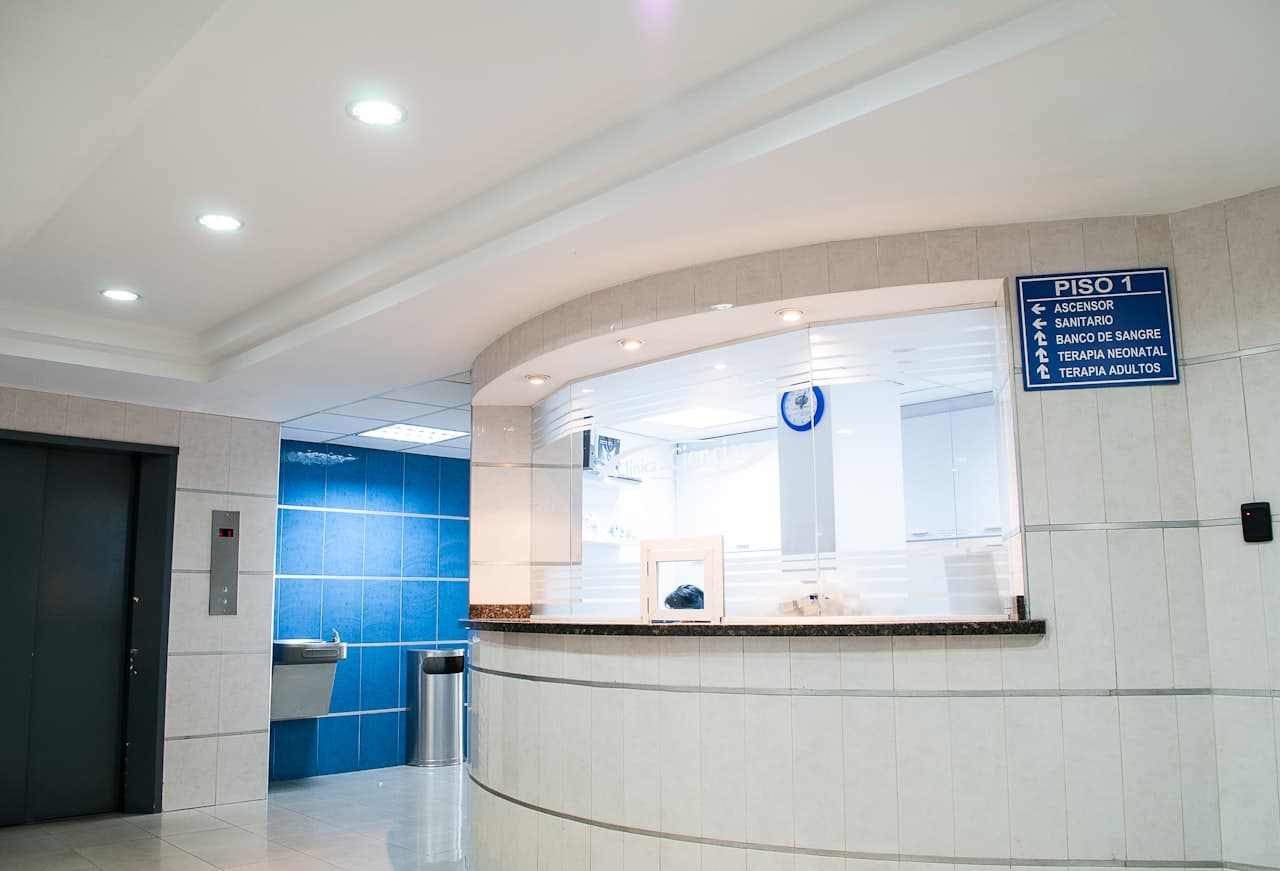
When a Sri Lankan healthcare owner searches for hospital software, the same question appears in different forms: “Do we need full HMS now?” “Can a clinic use hospital ERP?” “Should we start with billing or EMR?” The honest answer depends on facility type. A single-consultant clinic, a multi-specialty polyclinic, and a private hospital with inpatient beds need different digitization sequences—even if vendors sell the same product brochure to all three.
National policy is pushing the whole sector toward integrated digital health. The Ministry of Health’s National Digital Health Blueprint describes a move from fragmented, paper-heavy workflows toward interoperable services, common registries, and a National Electronic Health Record (NEHR) vision. Public-sector programs such as HHIMS upgrades and NEHR/digital health platform components are advancing through Ministry of Health initiatives supported by development partners. Private clinics and hospitals will not wait for national platforms to finish—but they should digitize in an order that avoids rework when interoperability standards matter more.
Clinic vs hospital: different operating cores
- Clinic / polyclinic core: appointments, OPD registration, consultation notes, prescriptions, basic investigations, cashier billing, and repeat-visit history.
- Small hospital core: everything above plus bed management, admission/discharge, ward orders, nursing workflows, theatre scheduling, and departmental billing.
- Multi-specialty hospital core: pharmacy dispensing with inventory control, laboratory orders and results, radiology workflows, credit/panel billing, insurance estimates, and management reporting across departments.
The Ministry of Health blueprint distinguishes providers across the public and private health system and emphasizes sharing clinically relevant data between organisations and facilities. That long-term direction matters even for private buyers: the systems you choose today should produce structured patient identity, encounter, diagnosis, medication, and billing data—not only PDF printouts.
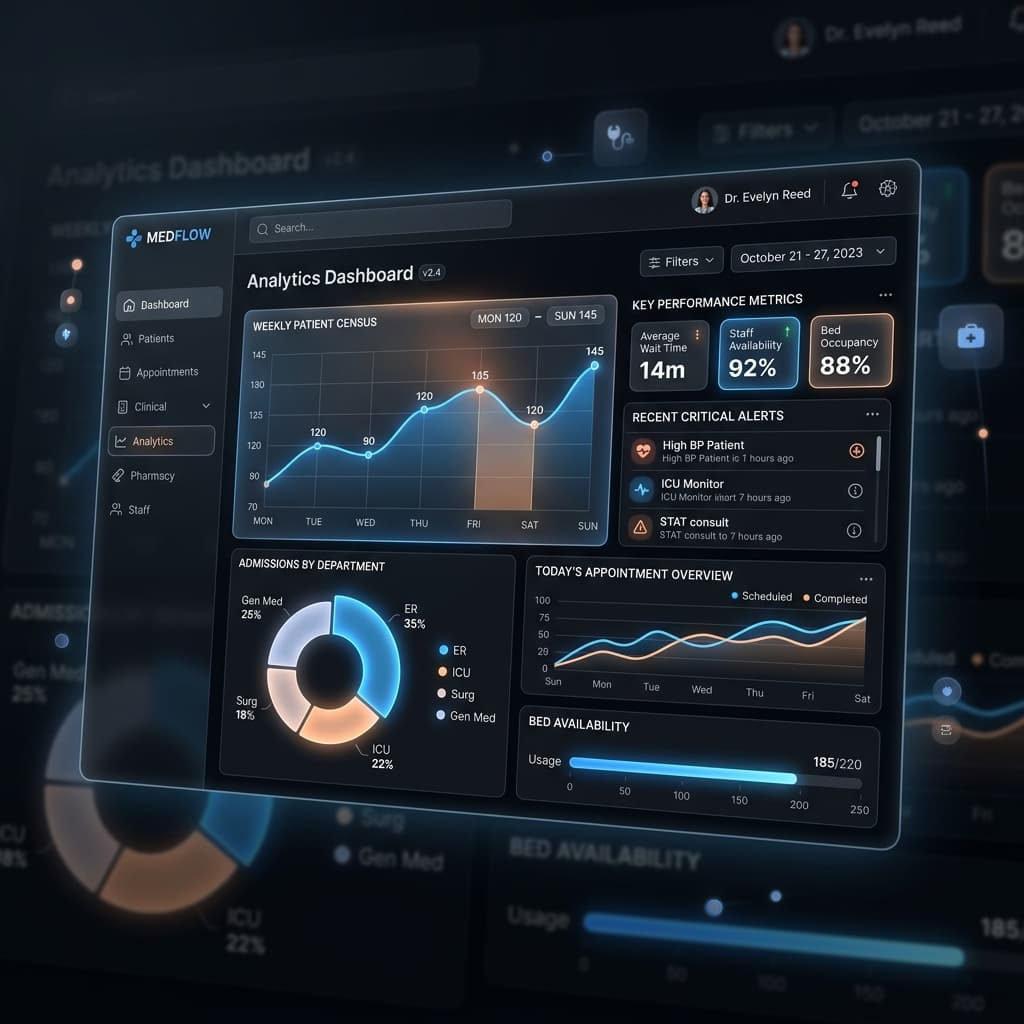
What clinics should digitize first
For outpatient-led clinics and medical centers (roughly 1–15 consultants, no overnight inpatient beds), start narrow and make daily OPD reliable.
- Patient registry with unique ID, demographics, contact, allergy flags, and visit history.
- Appointment and queue management so front desk and consultants share one waiting list.
- OPD billing with receipts, discounts, refunds, and daily cashier close.
- E-prescriptions and investigation orders with printable or digital outputs staff already use.
- Basic stock for clinic pharmacy or dispensary if drugs are dispensed on site.
- Daily reports: patient count, revenue by doctor, pending investigations, outstanding payments.
Clinics should not start with inpatient modules, theatre management, or enterprise inventory unless those services truly exist. Buying unused IPD capacity creates training fatigue and blank screens that staff bypass with paper.
What hospitals should digitize first
For private hospitals and inpatient facilities, the first wave should connect front door to back office—not jump to advanced analytics.
- OPD registration and billing linked to consultant schedules.
- Admission, bed allocation, transfer, and discharge summary workflow.
- Pharmacy indent, dispensing, and stock ledger tied to patient encounters.
- Laboratory order-entry and result release with audit trail.
- Ward nursing notes, vitals, and medication administration basics.
- Finance integration: deposits, estimates, panel/insurer billing, final settlement.
Radiology PACS, advanced BI, and AI-assisted triage can wait until OPD, pharmacy, and lab produce clean data every day. The blueprint’s emphasis on minimum clinical data sets and structured interchange is easier to meet when core modules already capture encounters consistently.
What not to digitize first
- Full enterprise HMS before front-desk and billing discipline exists.
- AI chatbots or agent workflows before patient IDs and visit records are reliable.
- Duplicate systems where consultants keep personal spreadsheets beside the HMS.
- Complex insurer integrations before standard cash and corporate panel flows work.
- National interoperability projects as an excuse to delay basic OPD digitization.
Public-sector vs private-sector reality
More than 85 major state-sector hospitals have been empowered with leading hospital health information systems according to the National Digital Health Blueprint, covering OPD, admissions, laboratory, pharmacy, radiology, clinics, and appointments—with ongoing upgrades toward national platform integration. Private hospitals and clinics operate on different procurement paths but face similar operational problems: duplicate tests, missing history, billing disputes, and ward-to-finance reconciliation gaps.
Private buyers should not assume they must implement government systems such as HHIMS. They should assume regulators, insurers, and patients will expect better traceability over time: who saw the patient, what was prescribed, what was billed, and what was dispensed.
A practical 90-day rollout by facility type
Clinic (days 1–90)
- Days 1–30: patient registry, appointments, OPD billing, end-of-day cashier report.
- Days 31–60: prescriptions, investigations, doctor-wise productivity reports.
- Days 61–90: pharmacy/dispensary stock and repeat-patient recall lists.
Hospital (days 1–90)
- Days 1–30: OPD + admission registration + bed board for one pilot ward.
- Days 31–60: pharmacy and laboratory on live patients with supervisor approvals.
- Days 61–90: discharge workflow, final billing, and finance reconciliation reports.
Questions to ask before you buy
- Can we go live on OPD and billing in 30 days without enabling every module?
- Does the system support Sri Lankan billing patterns: cash, corporate panel, insurer estimates, and deposits?
- Can pharmacy, lab, and ward modules read the same patient encounter?
- Are role permissions and audit logs strong enough for billing adjustments and record edits?
- Can we export structured data later for insurers, auditors, or national interoperability standards?
- Who trains nurses, cashiers, and consultants—and in which languages?
Where Capricon Care fits
Capricon Care is built for Sri Lankan healthcare operations—from outpatient-led centers to multi-department hospitals. The right implementation sequence is not “buy everything.” It is digitize the patient journey you already run, then expand into pharmacy, laboratory, inpatient, and finance with one system of record. Capricon can help map clinic vs hospital scope, phase modules, and align rollout with how your teams actually work. Start with the hospital management system Sri Lanka guide, review HMS cost, then explore Capricon Care HMS or custom software development in Sri Lanka.
Sources and further reading
- Ministry of Health, Sri Lanka — National Digital Health Blueprint (November 2023, PDF)
- UNGM — Upgrade of HHIMS and integration with National Digital Health Platform / NEHR (Ministry of Health procurement notice)
- UNGM — National Electronic Health Record and National Digital Health Exchange (Ministry of Health procurement notice)
- UNGM — Implementation of the ‘thin-slice’ of the National Digital Health Blueprint (Ministry of Health procurement notice)
Related Capricon solutions
Explore tools and services for healthcare & hms
Related guides on this topic
- GP EMR vs Medical Center Software Sri Lanka | When DocWallet Isn’t Enough
- Hospital System Sri Lanka: What Buyers Mean When They Skip “Management”
- Hospital Pharmacy Management Software Sri Lanka | Capricon Care
- Clinic Management Software Sri Lanka (2026) | Medical Centers Guide
Related Capricon product & services
- Clinic management software Sri Lanka
GP and medical-center buyer guide—when lean EMR is enough vs Care stack.
- Capricon Care vs DocWallet
GP EMR vs Capricon Care for clinics that may grow into medical centers.
- Hospital management system Sri Lanka
Primary HMS buyer guide for clinics and hospitals choosing Capricon Care.
- Capricon Care vs CareCode
Open-source vs Capricon Care product delivery for SL hospitals.
- Capricon Care HMS
Hospital system for clinic, pharmacy, lab, OPD/IPD, theatre, and billing.
- HMS cost Sri Lanka
LKR planning bands for clinics and mini hospitals scoping Capricon Care.
Ready to take your business to the next level?
Your next big move starts here - take charge, scale up, and lead your business to success.